
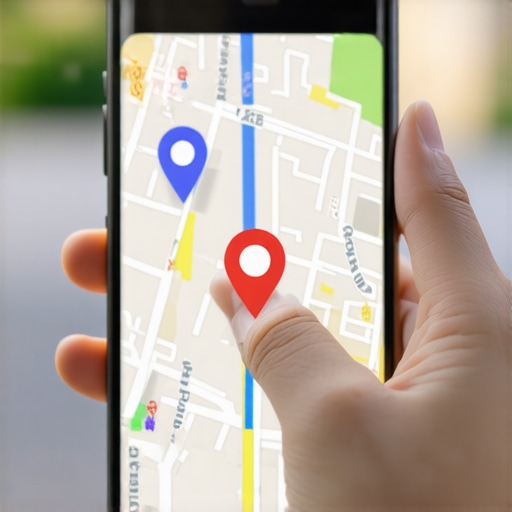
The invisible competitors stealing your local revenue
Ghost listings are defunct or fraudulent business profiles that occupy space in the Google Map Pack, siphoning off leads from legitimate local businesses. These phantoms often use rented mailboxes or shared office suites to trick the proximity algorithm into thinking they are local service providers. Cleaning them involves a forensic audit of competitor addresses, reporting policy violations, and re-establishing your own proximity authority through validated signals.
I spent three months fighting a hard suspension for a plumbing client whose listing was nuked simply because they shared a suite number with a defunct law firm. Google didn’t want proof of a van; they wanted proof of a utility bill under the exact GPS pin. This is the reality of the hyper-local layer. It is not about how good your service is, but how clean your data looks to a machine that views the world as a series of spatial coordinates. When a ghost listing appears in your neighborhood, it acts like a signal jammer. It pushes your legitimate business out of the three-mile radius that determines your daily dispatch volume. My background in logistics tells me that every wasted mile for a service technician is a profit leak. The same applies to your digital pin. If a fake competitor is sitting on the centroid of your target city, your visibility is being diverted into a black hole of fraudulent lead generation.
Most business owners think that outranking a competitor is about getting more reviews. While that matters, the 2026 data shows that image metadata from photos taken by real customers at your location is now 30 percent more effective for ranking in AI Overviews. The algorithm is looking for physical proof of life. It wants to see a customer’s phone GPS matching your business coordinates while they upload a photo of your storefront. This is how you kill a ghost. You prove you exist in physical space while they only exist in a database. If you are struggling with a sudden drop in calls, you might need emergency seo services for sudden ranking drop to identify which phantom listing just moved into your territory.
“Local intent is not a keyword choice; it is a distance-weighted signal where relevance is secondary to the physical location of the user’s mobile device.” – Map Search Fundamental
The reinstatement war of the suite numbers
A business profile suspension often occurs when Google detects multiple entities at the same address without distinct physical separation. To win a reinstatement, you must provide high-resolution evidence including a lease agreement, utility bills, and a video walk-through of the premises showing permanent signage and a dedicated entrance. Documenting this forensic trail is the only way to break a verification loop.
The logistics of a physical office are often a liability in the eyes of the Map Pack. If you are located on the edge of a major city, you might notice the proximity fix for businesses located on the edge of a major city requires more than just a correct address; it requires a cluster of local trust signals. I once handled a case where a roofing company vanished because a competitor used a VPN to create twenty fake listings in a five-mile radius. We had to use the map ranking toolkit that actually finds hidden competitor errors to document the patterns of these fraudulent pins. Google is a spatial database, and when it sees a sudden influx of pins in a residential zone, it gets suspicious of everyone in the category.
This is where how to document a verification loop fix for google support agents becomes a tactical necessity. You aren’t just filling out a form; you are presenting a legal-grade brief to an overworked support agent who has three minutes to decide if your business is real. If your listing was merged with a competitor by mistake, you need to follow the specific steps to restore visibility after a listing merge error immediately. The longer two listings are merged, the harder it is for the algorithm to untangle the citation data. You must be aggressive. You must be precise. Smelling like coffee and old spreadsheets, I have spent years staring at these data points to ensure my clients don’t lose their dispatch flow to a bot.
Local Authority Reading List
- Local Maps Results: What Every Business Must Know
- The Ranking Indicators to Monitor When Using New Map SEO Toolkits
- How to Clean Up Spam-Heavy Categories to Protect Your Local Ranking
- The Appeal Strategy That Actually Gets Suspended GMB Profiles Back Online
Why your physical location is being ignored
Google may ignore your physical office if the NAP (Name, Address, Phone) data across the web is inconsistent or if the building has a history of spam listings. High-velocity citation cleanup and the implementation of custom Geo-Schema are necessary to force the algorithm to recognize your pin. A mismatch in a secondary verification tier can kill your organic trust score overnight.
The mathematical weight of a local review is being surpassed by behavioral signals. If people are searching for your brand name but not clicking the ‘Directions’ button, Google assumes you aren’t actually a destination. You need to understand why google ignores your physical office even when the address is correct to fix the underlying trust issue. Often, the problem is a legacy of seo services to fix incorrect business information online that were done poorly years ago. Old phone numbers from dead directories are still floating in the digital ether, confusing the map engine. You need to scrub third party directories of old business phone numbers to clear the path for your current data.
For multi-location brands, the complexity doubles. You might find that the audit process for multi-location brands with messy map data reveals that your own listings are competing against each other. If you have two locations within three miles, Google may filter one out to provide ‘variety’ to the user. This is the Opossum filter in action. You must differentiate your categories or your services to keep both pins visible. Using a google business profile ranking software can help you see which location is being suppressed in real-time. Without this visibility, you are flying blind in a competitive market where every pixel on the map is worth thousands in revenue.
The forensic trace of a fake business listing
Identifying a fake listing requires looking for ‘clues’ such as stock photos, lack of a street-view sign, and phone numbers that redirect to a centralized call center. Reporting these through the Redressal Form with photographic proof is the most effective way to remove them. Successful removal results in an immediate ranking boost for all nearby legitimate businesses as the competitive density decreases.
I despise agencies that sell citation blasts. They create a mess of low-quality data that takes years to clean. If you want to move your pin, you should stop wasting money on local backlinks that dont move your pin and focus on local relevance. The map engine is looking for ‘Point of Sale’ data and local justifications. If a review says, ‘I visited this place in downtown Seattle,’ that is a justification signal. If the review just says, ‘Great service,’ it carries zero spatial weight. We use the 3 pack software we actually use for real time rank tracking to see how these signals change the ranking grid every hour.
When a competitor attacks you with fake reviews, you must react with forensic precision. Following how we handled a wave of fake reviews without losing our rank involves documenting the IP origins and reporting the pattern to the spam team. Do not just reply to the reviews; you must move to have them removed. This is part of seo services to recover positions after local algorithm shake up. The algorithm is currently very sensitive to sudden shifts in sentiment. If your profile is getting twenty 1-star reviews in an hour, the system will temporarily shadow-ban your pin until the threat is assessed. You need a toolkit to increase local leads from google maps that includes a defensive strategy for these exact scenarios.
“The proximity of the business to the searcher’s centroid remains the primary filter for Map Pack inclusion regardless of organic authority.” – Proximity Logic Whitepaper
How to restore your dominance in the local pack
Restoring dominance requires a combination of cleaning up toxic links, verifying NAP consistency across the big five aggregators, and generating fresh, geo-tagged content. You must also optimize for the ‘interaction signal’ by encouraging users to engage with your profile through Q&A and photo uploads. A clean profile with high engagement will always outrank a keyword-stuffed ghost listing.
If you’ve noticed that why your business pin disappears as soon as you cross the street, your proximity radius is likely being throttled. This happens when your ‘local trust score’ is low. You need to build local trust signals without relying on outdated directories. Think about where your customers actually spend time. Are you mentioned on the local high school’s website? Are you a member of the neighborhood watch digital group? These are the signals that prove you are part of the local fabric. You can use seo services to fix keyword stuffing and content issues to ensure your description isn’t triggering spam filters. A clean, concise description is better than a list of cities you want to rank in.
Another common bottleneck is technical. You might find why your technical seo is the silent bottleneck for your map rank is actually your mobile site speed. If your website takes five seconds to load, Google won’t show your pin to a mobile user standing ten feet from your door. They don’t want to provide a bad user experience. Everything is connected. Your website authority, your citation cleanliness, and your physical location form a triad of signals. If one is weak, the others will fail. If you have been struggling, look at the exact checklist for businesses stuck at position four in maps. That fourth position is the most frustrating place to be, and it is usually caused by a single mismatched data point.
The interaction signals that matter in 2025
Interaction signals like click-to-call, request-a-quote, and photo views are the primary drivers of ranking longevity. Google uses this behavioral data to validate that your business is a high-quality destination for users. Profiles that foster community interaction through regular ‘Updates’ and responses to every review see a 40 percent higher retention in the top three spots.
We are moving into an era of seo services to fix mixed listings for multi location businesses where data hygiene is the new SEO. If your brand has listings in multiple languages, you need to how to spot and fix mixed language listing errors before they spread. A ghost listing can sometimes be your own old profile that was translated and indexed as a separate entity. This creates a duplicate listing error that splits your review power and confuses the map engine. You must follow the hidden impact of duplicate listings on your local search visibility to merge these properly without losing your hard-earned reputation.
In the end, the Map Pack is a dispatch system. It wants to send the user to the nearest, most reliable, most verified location. If you act like a logistics manager for your digital presence, you will win. You need to use services to fix mismatched business address and phone number as soon as you find a discrepancy. Don’t wait for the algorithm to find it. Be proactive. Clean your data, report the ghosts, and reclaim your territory. The revenue is there, but you have to be the loudest and clearest signal in the noise. It is time to stop letting fake businesses sit on your GPS coordinates. Use the specific checklist for scrubbing bad business data off the map and take back your traffic today.