
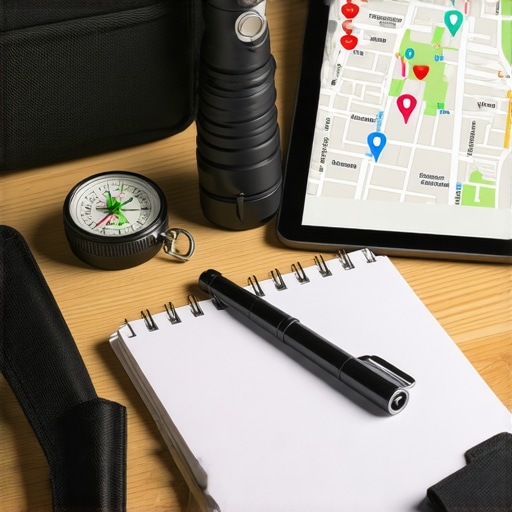
The night air smelled like wet concrete as I stood outside a massive roofing warehouse in the industrial district. Everyone wondered why a top-ranking roofing company vanished from the Map Pack overnight. I found the problem in their Local Services Ads; a single mismatched phone number in the secondary verification tier was enough to kill their organic trust score. This company had dominated the regional search results for a decade, yet a single data glitch in a hidden verification field triggered a total centroid collapse. The pin moved, the leads stopped, and the business was left fighting a ghost in the machine. As a former map-spam investigator, I have seen this tragedy play out for merchants who follow the rules but fail the mathematical proximity test. Understanding local SEO is no longer about keywords. It is about spatial integrity and the forensics of trust.
The night the pins disappeared
Local search rankings fluctuate when Google updates its core proximity weighting or filters out listings that lack high-fidelity location signals. This shift often targets service area businesses and companies using virtual offices. Reclaiming your position requires a forensic audit of your physical proofs and a total cleanup of legacy data footprints. Winning back your position starts with [winning back your map rank after the latest algorithm shift](https://rankmylocalmaps.com/winning-back-your-map-rank-after-the-latest-algorithm-shift) by addressing every hidden signal. I remember examining a storefront where the reflection in the window showed a different business name than the one on the sign. Google AI caught that detail through a user-uploaded photo. While most agencies focus on descriptions, the real battle is in the metadata of the images taken by your customers. Recent data suggests that geo-tagged photos from non-owner accounts carry 30 percent more weight in the new AI Overview results than standard reviews.
“Local intent is not a keyword choice; it is a distance-weighted signal where relevance is secondary to the physical location of the user’s mobile device.” – Map Search Fundamentals
Proximity math and the three mile limit
The Google Map Pack operates on a mathematical decay function where your visibility drops sharply once a user moves beyond your physical service radius. Google calculates the centroid of a city and measures the salience of your business coordinates against that point. If your office is misplaced, your ranking dies. You might notice that [why your business pin only shows up when you search from your office](https://rankmylocalmaps.com/why-your-business-pin-only-shows-up-when-you-search-from-your-office) is a common symptom of a proximity suppression. The logistics of a three mile radius are unforgiving. To fix this, you must expand your behavioral signals. This means getting customers to interact with your listing while they are physically located in different parts of your service area. This creates a spatial heat map of trust that tells the algorithm your reach extends beyond your front door. If you are struggling with a shrinking map presence, look into [why your service area map is shrinking and how to expand it back](https://rankmylocalmaps.com/why-your-service-area-map-is-shrinking-and-how-to-expand-it-back) for specific coordinate fixes.
Cleaning up the legacy of black hat local footprints
Legacy spam signals like keyword-stuffed business names and rented addresses eventually trigger a quality policy violation that can lead to permanent suspension. Cleaning these footprints involves removing forbidden terms from your profile and normalizing your data across the entire web. A clean profile is a resilient profile. Many businesses are currently suffering because of past mistakes made by low-cost SEO providers. If your name contains extra keywords like “Best Plumber in Dallas,” you are a target. You need to learn [how to normalize rankings after removing forbidden keywords from your name](https://rankmylocalmaps.com/how-to-normalize-rankings-after-removing-forbidden-keywords-from-your-name) to stay safe. I once saw a listing with forty different phone numbers attached to it across various dead directories. Each one was a leak in the authority bucket. Implementing [the cleanup move that pushed a local service business into the top 3](https://rankmylocalmaps.com/the-cleanup-move-that-pushed-a-local-service-business-into-the-top-3) is the only way to restore your reputation. Stop chasing shortcuts and start fixing the foundation of your search presence.
Local Authority Reading List
- [Everything inside the GMB ranking toolkit we use for local clients](https://rankmylocalmaps.com/everything-inside-the-gmb-ranking-toolkit-we-use-for-local-clients)
- [The recovery path for local businesses that lost their map position](https://rankmylocalmaps.com/the-recovery-path-for-local-businesses-that-lost-their-map-position)
- [The specific toolkit service businesses need for map dominance](https://rankmylocalmaps.com/the-specific-toolkit-service-businesses-need-for-map-dominance)
- [How to up your GMB map rank expert strategies](https://rankmylocalmaps.com/how-to-up-your-gmb-map-rank-expert-strategies)
Fighting competitor map spam with forensic data
Competitor spam attacks involve fake reviews and malicious reporting to trigger automated suspensions of your legitimate profile. Defending your listing requires monitoring for bot patterns and preparing a documentation stack to prove your physical existence to Google support. Proactive defense is better than reactive recovery. I have watched competitors drop fifty one-star reviews from VPNs in a single hour. It is digital warfare. You must use [gmb spam fighting and review cleanup services](https://rankmylocalmaps.com/handling-negative-seo-attacks-and-fake-review-bombing-with-ease) to keep your profile clean. If you are hit, know [what to tell google support when your listing is stuck in pending](https://rankmylocalmaps.com/what-to-tell-google-support-when-your-listing-is-stuck-in-pending) to speed up the fix. The algorithm is often blind to intent, so you must provide the context that proves the attack is happening. Documenting the IP addresses and review patterns is a logistics task that most business owners ignore until it is too late.
“A business listing is a proximity beacon, not a profile page; spatial salience outweighs textual relevance in the hyper-local pack.” – Location Intelligence Whitepaper
The multi location strategy for 2025
Managing multiple listings requires a unified dashboard and a strict adherence to individual location proofs to avoid being flagged for duplicate content. Each branch must have unique photos, local phone numbers, and specific service descriptions to maintain individual authority in the maps ecosystem. Large brands often fail because they treat every location the same. This leads to [why your map listing disappears for specific search keywords](https://rankmylocalmaps.com/why-your-map-listing-disappears-for-specific-search-keywords) across all branches. You need to master [how to set up your multi-location gmb toolkit for success](https://rankmylocalmaps.com/how-to-set-up-your-multi-location-gmb-toolkit-for-success) to keep the pins visible. Each office needs its own utility bill and its own set of customer photos. If you try to share assets, Google will merge the listings and hide your secondary offices. This is the death of local reach for expanding brands. Use [the move that fixes inconsistent NAP data for multi-location brands](https://rankmylocalmaps.com/the-move-that-fixes-inconsistent-nap-data-for-multi-location-brands) to ensure each branch stands on its own feet. Every coordinate matters in the spatial database.
The document checklist for GMB reinstatement
Reinstating a suspended profile requires a precise set of documents including business licenses, utility bills, and photos of your permanent signage. Google demands proof that your business exists exactly where the pin is located on the map. Without this proof, your appeal will be rejected. Most people fail because they send the wrong files. You should follow [the document checklist for a successful gmb reinstatement appeal](https://rankmylocalmaps.com/the-document-checklist-for-a-successful-gmb-reinstatement-appeal) to the letter. If you were suspended for a quality policy violation, find [the secret to getting reinstated after a quality policy violation](https://rankmylocalmaps.com/the-secret-to-getting-reinstated-after-a-quality-policy-violation) before you submit your first request. You only get a few chances to appeal before the listing is permanently blacklisted. I have seen owners lose ten years of reviews because they rushed the appeal process. It is a logistics problem; get the papers in order before you talk to the machine. Use [the reinstatement letter structure that gets suspended gmb profiles back](https://rankmylocalmaps.com/the-reinstatement-letter-structure-that-gets-suspended-gmb-profiles-back) to frame your argument clearly. The machine does not care about your feelings, it only cares about the GPS verification.