
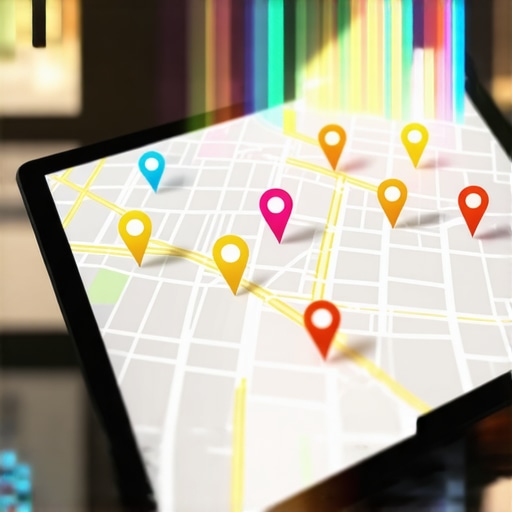
How Multi-Location Brands Should Handle Their Google Business Profiles
The lens of a camera never lies but the data behind a Google Business Profile often does. I walk through the streets and smell the wet concrete after a rainstorm, noticing how the digital map pin for a hardware store sits three doors down from its actual physical entrance. This glitch is the difference between a conversion and a lost customer. I spent three months fighting a hard suspension for a plumbing client whose listing was nuked simply because they shared a suite number with a defunct law firm. Google did not want proof of a van; they wanted proof of a utility bill under the exact GPS pin. This level of forensic detail is what separates a thriving multi-location brand from one that vanishes into the digital ether. Managing dozens or hundreds of profiles requires more than a spreadsheet; it requires an understanding of the spatial math that governs how Google perceives distance and trust.
The ghost in the GPS coordinates
Multi-location brands must anchor every profile to a unique, verifiable physical presence while maintaining strict data consistency across the entire digital ecosystem. Failure to align the exact latitude and longitude of a storefront with its registered utility data leads to a catastrophic loss of visibility. The algorithm treats a mismatched coordinate as a signal of fraud. When you manage a brand with fifty locations, the risk of a hidden impact of duplicate listings increases exponentially. You are not just managing names; you are managing beacons. If these beacons overlap or conflict, the entire network suffers. You need a specialized gmb audit and ranking toolkit to identify where your pins have drifted into the wrong neighborhood or where a competitor has placed a fake listing on your doorstep.
“Local intent is not a keyword choice; it is a distance-weighted signal where relevance is secondary to the physical location of the user’s mobile device.” – Map Search Fundamental
Why your physical address is a liability
A physical address becomes a liability when it lacks the secondary trust signals required to prove real-world operations to an increasingly suspicious algorithm. Many brands think a lease is enough, but Google looks for the pulse of the business through customer photos and check-in data. If your location is in a high-density area, you are competing for the centroid, the mathematical center of search relevance. Moving even a few hundred feet can trigger a ranking drop. This is why you must use the best gmb ranking tools for local seo to monitor your position relative to that centroid. If you are pushed to the edge of the city, you need a different strategy. You might need to implement a proximity fix for businesses on the edge of a city to reclaim the traffic you are losing to centrally located competitors.
Local Authority Reading List
The three mile radius that determines your revenue
The three mile radius around each location is the primary battleground where user behavior and local search signals determine your market share. Within this tight circle, every review and every photo carries more weight than any backlink. Google tracks the speed of a mobile device as it approaches your store. If the digital data does not match the physical reality, the trust score drops. Multi-location managers often overlook the correct category selection for each branch. A store in one zip code might need a different primary category than a store in another to capture local nuances. Using a gmb keyword and category research toolkit allows you to see what the neighbors are searching for, which is often different from what the national marketing team thinks is important. I have seen brands lose millions because they used a generic category when a hyper-local one was available.
Technical architecture for the multi location brand
A robust technical architecture for local SEO requires a deep integration between your website location pages and the individual Google Business Profiles. This is where many large companies fail. They create aggressive location page strategies that trigger filters. If your web pages are too similar, Google sees them as thin content. You need seo services to fix over aggressive location page strategy penalties before they tank your entire domain. Each page must have unique Schema markup. Use the toolkit fix for sites with duplicate content issues to ensure your internal links and metadata are distinct for every city. I often look at the EXIF data in storefront photos. If you use the same stock photo for fifty locations, you are telling Google that none of them are real. Real photos taken on-site with a smartphone are the gold standard for verification.
“Local search relevance is built on the forensic audit of user-generated content and the stability of location-specific metadata over time.” – Vicinity Research Paper
The forensic audit of local signals
A forensic audit of local signals involves scrubbing your citation profile and verifying that every third-party directory matches your core business data exactly. Automated tools often miss 30 percent of these errors. You have to get your hands dirty. I remember a case where a brand changed their phone number and forgot to scrub third party directories of the old one. Google kept reverting their GMB profile to the old number because it saw the old data as more authoritative. This is why you need a citation audit protocol that goes beyond the surface. You must also monitor for competitor gmb spam. In high-competition markets, rivals will report your locations as closed or change your hours. If you aren’t using tools to track and improve gmb rankings daily, you are flying blind.
Winning the map pack with verified data
Winning the map pack requires a proactive recovery strategy for suspensions and a constant flow of fresh, localized content to each profile. If a location gets suspended for a fake address violation, you need a google business profile recovery service after fake address suspension to handle the appeal. This is not a task for an intern. You need the evidence required for a successful appeal, such as business licenses and photos of permanent signage. While you fix the errors, you must also focus on the toolkit to rank higher in local map pack results. This includes managing review sentiment and responding to every customer. If you have missing map pack rankings, you need local seo services to fix missing map pack rankings by re-establishing the trust signals that Google has lost. The map is a living image. It changes every second as people move through the world. Your job is to make sure your brand is the clearest part of the picture.