
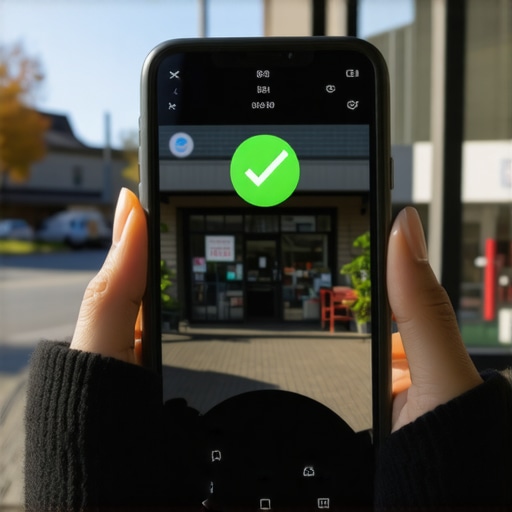
I smell the wet concrete and the metallic tang of a locksmith shop every time I walk into a business to audit their local presence. The street does not lie, but the map often does. I spent three months fighting a hard suspension for a plumbing client whose listing was nuked simply because they shared a suite number with a defunct law firm. Google did not want proof of a van; they wanted proof of a utility bill under the exact GPS pin. They wanted a video that started at the street sign and walked through the door to the desk where the checks were signed. This is the reality of the map pack today. It is not about keywords or clever descriptions. It is about forensic visual proof that anchors a digital entity to a physical slab of earth. If you cannot prove the door exists, the business does not exist in the eyes of the centroid algorithm. Most agencies fail because they try to solve a physical problem with digital tools. You cannot code your way out of a missing storefront sign.
The ghost in the GPS coordinates
GPS coordinate salience relies on verifiable physical evidence such as permanent signage, street numbers, and building exterior photos to establish location authority. Google uses computer vision to analyze image metadata and visual anchors to ensure that a business entity actually occupies the geographic coordinates claimed in the business profile. The street is full of ghosts. I see them every day when I use the software we use to track map pins. These are listings for businesses that moved three years ago or never existed at all. When the algorithm detects a mismatch between the reported address and the visual data it scrapes from Street View, it triggers a suspension. You need to understand that your phone is a tracking beacon. When you take a photo of your office, Google is not just looking at the pixels. It is looking at the latitude and longitude baked into the file. If that data does not match the pin, you are a ghost. You might be interested in the specific checklist for scrubbing bad business data before you attempt a verification. A single mismatch in your history can haunt your current efforts. I once saw a listing get flagged because the owner took a verification photo from their home instead of the office. The metadata told on them instantly. The algorithm does not listen to excuses; it only reads data. This is why why google ignores your physical office even when the address is perfectly correct on paper. It wants the visual handshake that only a raw, unedited photo can provide.
“Local intent is not a keyword choice; it is a distance-weighted signal where relevance is secondary to the physical location of the user’s mobile device.” – Map Search Fundamental
The three mile radius that determines your revenue
Proximity signals dictate map pack rankings based on the distance between the searcher and the verified business location. Visual verification strengthens these trust signals by confirming that the business pin is accurately placed within the service area or downtown core. Most owners think they can rank across the whole city. They cannot. The algorithm is a circle that shrinks and expands based on trust. If your photos are weak or look like stock images, that radius stays small. You are fighting for scraps on the edge of the city. If you find why your service area map is shrinking, the problem is likely a lack of fresh, location-verified content. The algorithm wants to see customers at your shop. It wants to see your trucks in the driveway. It wants to see the unique grain of the wood on your desk. This is not about aesthetics. It is about the math of presence. When I audit a client, I look for the gaps in their visual story. Are they using generic business photos that look like they were bought for five dollars? If so, they are killing their trust. The street photographer knows that a blurry photo of a real sign is worth more than a professional photo of a fake one. You must prove you are the dominant entity in that three-mile circle. If you are stuck at the bottom of the list, look at the exact checklist for businesses stuck at position four. Often, the missing piece is a set of photos that prove you own the sidewalk in front of your door.
Why your physical address is a liability
Physical addresses become ranking liabilities when inconsistent NAP data or shared suite numbers create algorithmic confusion within the local map pack. Photo proof serves as the primary evidence needed to resolve listing overlaps and verify the legitimacy of a brick and mortar location. I have seen law firms lose fifty percent of their leads because they shared a floor with a competitor. Google sees two businesses at the same point and chooses the one with the most physical proof. If you do not have a sign on the door, you are losing. You need to use the specific photos google support needs to prove you are separate. This includes the building directory, the mailbox, and the hallway leading to your office. Do not assume they know you are there. The map is a flat representation of a 3D world, and things get lost in the layers. If you are dealing with the fastest way to clean up NAP data, you must pair that cleanup with a fresh batch of photos. Otherwise, the old data continues to pull on your pin like an anchor. I once worked with a client who had forty different phone numbers listed across the web. We had to take photos of their actual office phone and the signage in their lobby just to get the support team to believe us. You can see how we found and fixed 40 incorrect phone numbers to understand the scale of the mess. Your address is only as good as the proof you provide to back it up. Without it, you are just a line in a database that can be deleted at any moment.
Local Authority Reading List
- The Evidence You Need to Successfully Appeal
- Handling Sudden GMB Suspensions
- Exact Schema Fields for Local Verification
- Mastering Map Ranking Foundations
- Step-by-Step Approach to Better Maps
The visual evidence Google actually demands
Verified visual evidence requires non-stock imagery that captures permanent signage, internal office layouts, and branded equipment to pass Google manual reviews. This forensic documentation is mandatory for reinstating suspended profiles and verifying new business locations that lack a longstanding digital footprint. When I talk to business owners, they want to show me their logo. Google does not care about your logo. It wants to see the permit on the wall. It wants to see the street name on the corner of the building. If you are trying to find the appeal strategy that actually gets profiles back online, it always starts with the camera. You need to record a video that is a single, continuous shot. Start outside. Show the neighboring businesses. Show the street. Walk into your office. Turn on the lights. Show your computer screen with the Google Business Profile dashboard open. This is the level of detail required. If you use top google business profile seo toolkits, they will tell you to optimize your description, but they often forget the physical reality. The algorithm is skeptical by nature. It assumes you are a lead-gen site until you prove you have dirt under your fingernails. I have spent years as a map-spam investigator. I know the tricks people use. I know the fake signs. Google knows them too. If your signage is a piece of paper taped to a door, you will fail. You need the toolkit every local contractor needs to ensure your physical presence is documented correctly. The street photographer sees the truth in the shadows. The algorithm sees the truth in the metadata.
“A verified location is a mathematical certainty derived from overlapping signals of utility bills, photographic anchors, and persistent GPS pings.” – Proximity Logic Whitepaper
The metadata trap hiding in your smartphone
Image metadata such as EXIF data provides hidden signals that Google uses to geolocate business photos and verify physical proximity. Optimizing photos with correct location tags can prevent listing suspensions and improve local relevance within Google Maps. Most people take a photo and upload it without a second thought. That is a mistake. If your location services were off, that photo is useless for verification. It is a hollow shell. You need to know how to find the hidden photo metadata that the algorithm craves. This data includes the camera model, the timestamp, and the precise GPS coordinates. When Google sees a photo taken at the exact spot your pin is located, its trust score for your listing spikes. This is how you win in 2025. It is about building a wall of evidence that no competitor can tear down. If you are using seo services to clean legacy black hat footprints, you must also clean up your visual history. Delete the stock photos. Delete the low-resolution images from five years ago. Replace them with high-definition, geotagged proof. The street photographer knows that light and timing are everything. For a business, timing is about consistency. If your photos were all taken on the same day three years ago, you look like a dead listing. You need a pulse. You need the interaction signal that triggers a faster rank change, which often comes from new photos uploaded by customers. This is the most powerful trust signal in existence. It is harder to faked than a review and twice as valuable for ranking.
The verification loop that kills small businesses
Verification loops occur when Google rejects physical proof due to technical errors or conflicting business information across third-party directories. Breaking these loops requires documenting the physical location with redundant photo evidence and resolving NAP inconsistencies. I have seen businesses get stuck for months. They send a photo, it gets rejected, they send another, it gets rejected. They are dying because they are invisible on the map. If you are in this trap, you need to learn how to break free and get live. The secret is often in the details you think are unimportant. Is there a mismatch between your business name on the sign and your business name on the listing? Even a small difference like “Plumbing Services” vs “Plumbing Co” can trigger a loop. You might need seo services to fix keyword stuffing in your name before you even try to verify. The algorithm is looking for reasons to doubt you. Give it no reasons. When I take a photo for a client, I make sure the address number is visible in the same frame as the business name. I make sure the street name is visible in the background. I provide a map of the internal layout if it is a complex building. You should look at the real reason your profile reinstatement was denied. It is rarely a lack of photos; it is a lack of the right photos. You are not just taking a picture; you are building a legal case for your existence. The street is a messy place, and the algorithm needs you to bring order to that mess through clear, undeniable visual proof.
The forensic path to a trusted pin
Forensic map optimization involves auditing visual data and clearing citation spam to establish a highly trusted business pin. This process ensures that search engines recognize the physical location as the authoritative source for local service queries. To reach the top spot, you have to do the work that others skip. They buy links; you take photos. They fake reviews; you document your work. If you want to know the secrets to a higher gmb rank in 2025, it is all about authenticity. The algorithm is moving toward a model where only verified physical entities can participate in the map pack. This is the end of the line for the lead-gen spammers. They cannot provide the photo proof. They do not have the utility bills. They do not have the street-level presence. You do. If you have been attacked by competitors, you need the tactics used by agencies to wipe out spam. This includes reporting fake locations that are crowding your space. When you clean the map, your own pin shines brighter. Use the map ranking toolkit that actually finds errors to spot the weak points in your market. You are the photographer of your own success. Every photo you upload is a brick in the wall of your local authority. Do not stop until your presence is undeniable. The street is waiting. The map is waiting. Take the shot and secure your spot.