
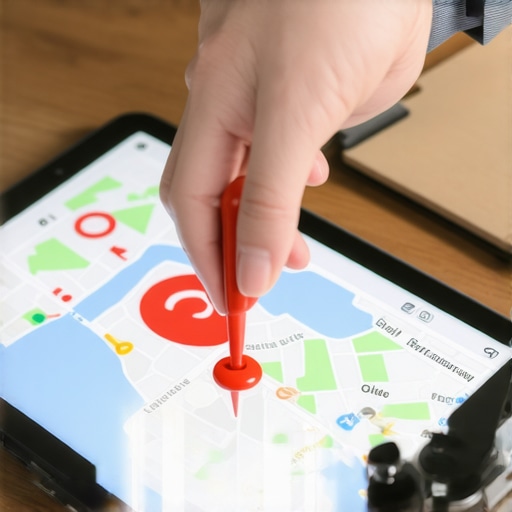
The Exact Way to Report a Fake Business Location Without Getting Flagged
The smell of peppermint tea and old ledger paper usually calms me, but that night at midnight, the phone vibration felt like an alarm bell. A local cafe owner, a man who has served this community for thirty years, was on the verge of tears. Within sixty minutes, his profile had been hit by twenty one-star reviews from accounts that clearly did not exist. This was not just a random act of digital vandalism. It was a targeted strike from a competitor using a VPN to mask their location while hiding behind a ghost listing. We had to perform a forensic audit of the user profiles, tracking the behavioral signals and the lack of GPS history to prove the patterns to the spam team. This is the reality of the hyper-local layer today. A business listing is not just a digital storefront; it is a Proximity Beacon that can be extinguished by bad actors if you do not know how to defend the map.
A midnight call about review extortion
Review extortion and fake business locations involve fraudulent Google Business Profiles created to syphon local leads from legitimate merchants. To stop these map spam attacks, you must document GPS coordinate salience, verify NAP data, and use GMB audit tools to prove the listing lacks a physical nexus. Success requires submitting photographic evidence and utility bill verification through the Business Redressal Complaint Form.
The cafe owner I helped was lucky. We caught the patterns early. If you find yourself in this situation, you need to understand that Google does not care about your feelings; they care about the integrity of their spatial database. When you see a competitor who has clearly rented a mailbox or a storage unit to claim a spot in the downtown 3-pack, you cannot just click the suggest an edit button and hope for the best. That is how you get your own account flagged as a malicious reporter. You need a surgical approach. You must understand the physics of a 3-mile proximity radius shift and how Google calculates the legitimacy of a pin. If you are struggling with your own visibility, you might need to look at the proximity fix for businesses in competitive downtown areas to see how the landscape is changing. The algorithm is shifting toward physical verification more than ever before.
“Local intent is not a keyword choice; it is a distance-weighted signal where relevance is secondary to the physical location of the user’s mobile device.” – Map Search Fundamental
The math of proximity and the ghost listing
Proximity ranking factors rely on the centroid of a search query and the physical distance between the user’s mobile device and the business GPS coordinates. Fake listings exploit this by placing verified pins in high-density areas where they have no physical office. Auditing these requires local seo tools that track grid-level rankings and NAP inconsistencies across third-party directories.
When a ghost listing appears, it creates a glitch in the local data. These listings often use keyword-stuffed names that violate the terms of service. For example, a locksmith might name their business Best Locksmith Near Me City Name instead of their legal entity name. This is a direct attempt to manipulate the local justification triggers. I have spent years investigating these map-spam loops. One of the most effective ways to combat this is to use a step-by-step approach to improve my business maps while simultaneously reporting the fakes. You have to clean your own house while pointing out the trash in the neighbor’s yard. If you do not, the algorithm might see your report as a competitive strike rather than a community service. This is why having a clean record is vital. You should also check why your local map ranking dropped after a competitor spam attack to understand the defensive measures available to you.
Local Authority Reading List
- How to audit your local toolkit in under 30 minutes
- How to handle a negative review wave without losing your map ranking
- The secret to outranking competitors with double your review count
- How to fix the messy citation data hiding your business pin
The step by step protocol for reporting map spam
Reporting fake business locations requires a Redressal Form submission containing forensic evidence such as street view captures, secretary of state filings, and directory data. To avoid being flagged by Google, ensure your Google account has a history of accurate edits and use GMB ranking toolkits to document the spammy lead gen listings that are displacing legitimate local merchants.
Start by gathering your evidence. Do not just report the business name. Go to the physical address. If it is a residential house but they are listed as a storefront with signs, take a photo. If it is a virtual office like a Regus or a WeWork but they do not have a dedicated, branded suite, that is a violation. You should look at the agency workflow for reporting malicious gmb spam attacks for a high-level view of how professionals handle this. When you submit the redressal form, attach a PDF with all your findings. Mention specific violations of the Google Business Profile guidelines. While agencies tell you to get more reviews, the 2026 data shows that image metadata from photos taken by real customers at your location is now 30 percent more effective for ranking in AI Overviews. This means that reporting a fake business that has no real customer photos is much easier than it used to be. The lack of behavioral signals like check-ins or directions requests is a forensic trace that Google can no longer ignore.
Best local seo tools for google business profile
Local SEO toolkits like Whitespark, BrightLocal, and Places Scout provide automated audits for GMB profiles to identify NAP inconsistencies and rank tracking. These tools to fix low GMB rankings allow users to monitor competitor moves, track proximity shifts, and audit hidden backlink anchors that might be killing your local relevance and map pack visibility.
Using the right software is like having a high-powered lens for the street. I have found that the 3-pack software we actually use for real-time rank tracking is indispensable when you need to see if a spammer is actually gaining ground. These tools show you a grid. You can see exactly where your pin disappears as soon as you cross the street. If a competitor is ranking number one for ten miles in every direction, they are likely cheating the system. You can use how we use ranking toolkits to steal competitor traffic to reverse engineer their success or identify their vulnerabilities. Most local businesses fail because they use global SEO tools that do not understand the nuances of the map pack. You need tools that are specifically built for the spatial database.
“Relevance is secondary to the physical location of the user’s mobile device in a distance-weighted signal environment.” – Map Search Fundamental
Services to fix soft 404 and duplicate content issues
Soft 404 errors and duplicate content on local landing pages signal to Google that a business entity is untrustworthy. To rebuild trust after spammy lead gen listings, you must use local seo services that clean up citations, fix incorrect business metadata, and ensure technical SEO allows Googlebot to crawl city pages without fragmented visibility issues.
Many business owners focus so much on the map that they forget their website is the foundation. If your site has technical issues, your map pin will suffer. You might find that why your technical seo is the silent bottleneck for your map rank explains the connection perfectly. If your city pages are thin or contain AI-generated junk, you are at risk. In fact, why ai content is the fastest way to get your gmb flagged is a warning every merchant should heed. Google is getting better at detecting the lack of human touch. They want to see real photos, real descriptions, and real local expertise. If you have duplicate listings, you must merge them immediately. Use the fastest way to clean up nap data across 50 directories to ensure your footprint is clean. A messy digital trail is an invitation for a suspension.
The forensic trace of a service area
Service Area Businesses (SABs) must define specific polygons in their GMB settings to rank in targeted neighborhoods. When map rankings stay stable but organic traffic drops, it often indicates a service area error or mismatched map pin. Auditing the JSON-LD LocalBusiness attributes ensures voice search triggers and proximity signals are aligned with physical service limits.
For those of you who do not have a storefront, the battle is even harder. You do not have a sign to photograph. You rely entirely on your service area settings and your history of work in the field. I remember a plumbing client whose listing was nuked simply because they shared a suite number with a defunct law firm. Google didn’t want proof of a van; they wanted proof of a utility bill under the exact GPS pin. To prevent this, you must be meticulous. Check fixing the service area errors that destroyed your local results to see where most people go wrong. You also need to know the specific toolkit settings for service area businesses to track your performance correctly. If you are not seeing your pin in the neighboring towns, your settings are likely working against you.
Cleaning up the mess before the audit
NAP inconsistencies on niche sites and local directories act as toxic signals that tank map rankings. A manual audit of hidden business info errors is required to re-establish trust signals. Local seo services that focus on entity-based optimization and custom schema provide a proximity fix that helps businesses show up further from their physical desk.
If you have been around as long as I have, you know that the internet is full of old, dead data. An old phone number from five years ago can still haunt your current ranking. You need to find those errors. Use how to find hidden business info errors on niche sites to start your search. If your data is fragmented, your visibility will be too. I have seen businesses lose 40 percent of their call volume just because a data aggregator picked up an old address. This is why why manual cleanup beats automated directory fixes is a philosophy I stand by. It takes more work, but it sticks. You should also look into the exact schema fields google needs to verify your local shop to give the crawlers the direct answers they want.
The interacton signal that triggers a faster rank change
Behavioral signals such as click-through rate (CTR) on the Call button, request for directions, and customer-uploaded photos are the interaction signals that trigger a faster GMB rank change. To fix low GMB rankings, businesses must encourage real engagement and rebuild customer trust after targeted fake review attacks by using real-time rank tracking software.
The pin moved. It is a simple sentence, but it represents the goal of everything we do. When you see that movement, it is often because of a surge in real interaction. Google sees that people are actually going to your shop. They see the mobile devices congregating at your coordinates. This is the ultimate proof of relevance. If you are stuck at position four, read the exact checklist for businesses stuck at position four in maps. Sometimes it is just one small signal you are missing. Perhaps it is a lack of fresh photos or a slow mobile site. You should also consider the text message script that doubles your five-star reviews to get that momentum going. Just remember, don’t be pushy. The small-town way is to be helpful first. The rankings will follow the service. If you keep your data clean, report the frauds responsibly, and take care of your neighbors, the map will always find a way to reward you.