
The Map Ranking Toolkit We Use to Audit Competitive Local Markets
I spent three months fighting a hard suspension for a plumbing client whose listing was nuked simply because they shared a suite number with a defunct law firm. Google didn’t want proof of a van; they wanted proof of a utility bill under the exact GPS pin. Standing on that sidewalk, the smell of wet concrete after a morning rain reminded me that the digital map is just a fragile reflection of physical reality. I noticed a glitch in how the storefront was rendered in Street View, a ghosting effect that suggested the data was stale. This is why a gmb ranking toolkit buy decision should never be made lightly. You are not just buying software; you are buying a lens to see the mathematical cage Google builds around your business. If the data is wrong, the pin dies.
The mathematical cage of local proximity
Local proximity signals determine whether your Google Business Profile appears in the Map Pack or remains invisible to local customers. The algorithm prioritizes the GPS coordinates of the user relative to the centroid of the business location. This spatial relationship is weighted more heavily than traditional backlinks or keyword density. While many agencies focus on broad terms, we use specific software we use to track map pins at the street level to see where the visibility drops off. Often, a business disappears as soon as you cross the street. This happens because the proximity weight shifts dramatically at the micro-level. Understanding this physics is the first step in auditing a competitive market where every inch of the map is contested by rivals.
“Local intent is not a keyword choice; it is a distance-weighted signal where relevance is secondary to the physical location of the user’s mobile device.” – Map Search Fundamental
Why your physical address is a liability
Physical business addresses often trigger hard suspensions when they are located in shared office spaces or virtual offices. Google’s spam filters are aggressive toward any NAP data that appears duplicated or illegitimate. If you are a service area business, your address verification must be flawless. Many practitioners find themselves stuck when they try to verify your business address when Google says no, leading to a total loss of visibility. The reality is that your address is a point of failure. If the algorithm detects a residential listing pretending to be a retail storefront, the penalty is swift. We look for these structural weaknesses during our audits to ensure our clients are not building on sand. A single mismatched phone number in a secondary directory can destabilize the entire trust score of the profile.
The three mile radius that determines your revenue
Geographic search radius limits how many local leads from Google Maps a business can capture in a single day. Most local businesses believe they can rank across an entire city, but the Vicinity algorithm often caps organic reach to a tight three mile radius around the office. We use a local seo toolkit for google maps ranking to visualize these boundaries. If you want to expand, you must understand optimizing your map listing for visibility in neighboring towns through hyper-local content and entity association. You cannot simply keyword stuff your way into the next zip code. The system looks for behavioral signals like driving direction requests and click-to-call events from users in those specific areas. If the map does not see those signals, your pin will not show up.
Local Authority Reading List
- Mastering Map Ranking Foundations
- Ranking for Near Me Without Spamming
- Why Cheap Services Tank Your Ranking
- Real-Time Rank Tracking Tools
- Winning the 3-Pack Fast
Tactical moves to fix a toxic backlink profile
Toxic backlink profiles are the silent killers of local map rankings because they signal black hat manipulation to the spam department. We often see businesses that used automated citation blasts in 2018 still suffering from legacy footprints today. To fix this, you need seo services to fix toxic backlink profile issues by performing a manual audit of every referring domain. Many of these links come from global directories that have no local relevance, which actually hurts your proximity score. We prioritize cleaning up a backlink profile that is dragging down your local relevance. It is better to have ten links from the local chamber of commerce and the neighborhood blog than a thousand links from generic SEO forums. The algorithm is looking for geographic density in your link graph.
The information gain in customer photos
Customer uploaded photos contain EXIF metadata and geographic tags that prove your business is actually serving people at a specific location. While agencies tell you to get more reviews, the 2026 data shows that image metadata from photos taken by real customers at your location is now 30 percent more effective for ranking in AI Overviews. This provides information gain that stock photos cannot match. I always look for the grain in a real photo, the way the light hits the physical signage. If you use generic business photos, you are essentially telling Google that your business is a digital ghost. Real images taken on-site are the strongest trust signal you can provide. We encourage clients to have their staff take photos of completed jobs in the field to build a spatial history of their service area.
How gmb ranking toolkits work for local seo
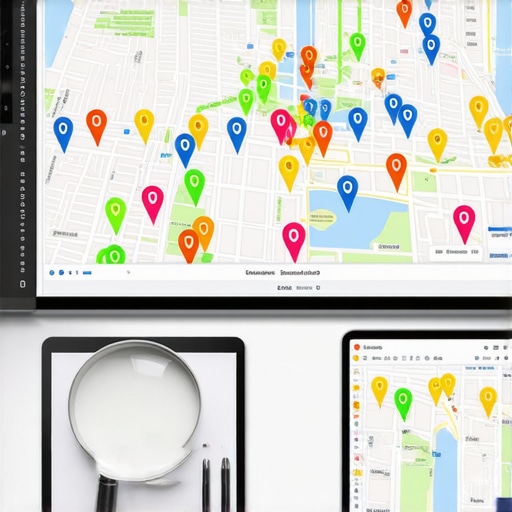
GMB ranking toolkits function by querying the Google Maps API from multiple geographic nodes to simulate user searches. This allows us to see the grid of visibility and identify where a business is stuck in a filter. If you want to download gmb ranking tools for local seo, you must ensure they support point-of-interest analysis. We often find that a business is ranking number one at their desk but number ten just two blocks away. This is why ranking software shows you as number one when you are not in the eyes of a real customer. Our toolkit identifies these blind spots so we can adjust the local justification signals in the business description and posts to cover the gap. The goal is to move the pin mathematically without triggering a manual review.
Forensic auditing of service area polygons
Service area businesses (SABs) must define their coverage area using polygons or zip codes in the dashboard. If these areas are too broad or overlap with duplicate locations, the listing will be filtered out. We use a toolkit to increase local leads from google maps to audit these service areas for cannibalization. When two listings from the same brand compete for the same street, Google often hides both. You need fixing service area errors that are destroying your local results. The algorithm prefers a clear, non-overlapping geographic footprint. We verify that each technician’s service route matches the claimed area in the GBP dashboard to ensure behavioral alignment. If you claim to serve a city fifty miles away but no one ever requests directions from there, the search engine will eventually stop showing your listing in that region.
Local leads from google maps and the LSA loop
Local Services Ads (LSAs) and organic map rankings now operate in a feedback loop where review velocity and responsiveness matter more than ever. If your LSA bidding is high but your organic map profile is weak, your cost per lead will skyrocket. We use seo services to fix gmb hard suspension for service area business clients to get them back into this loop. A suspended listing means zero ad trust. Once the profile is live, we implement text message scripts to double reviews to feed the interaction signals the algorithm craves. This creates a trust flywheel where organic visibility supports ad performance and vice versa. The map is no longer a static directory; it is a live dispatch system that rewards the most active and verified entities. [image_placeholder_1]
“Proximity is the ultimate filter; if the system cannot verify your physical presence at the moment of search, relevance becomes irrelevant.” – Local Search Intelligence Report