
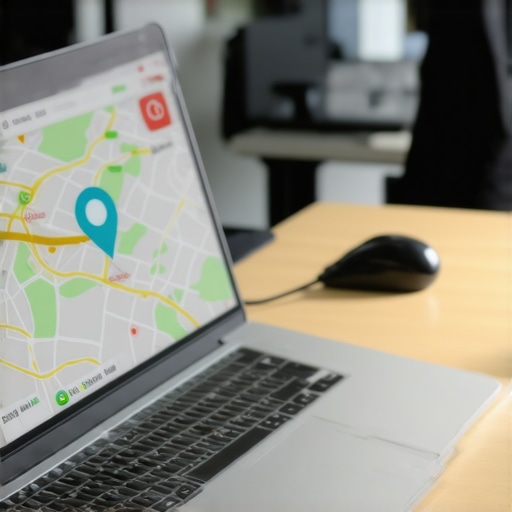
The city smells like wet concrete and ozone after a morning rain. I walk these streets with a 35mm lens, looking for the small glitches that separate a real storefront from a digital ghost. To most, a street is just a path; to me, it is a grid of competing proximity beacons. When a business owner calls me because their profile is stuck in pending, I do not see a technical error. I see a failure of spatial proof. I spent three months fighting a hard suspension for a plumbing client whose listing was nuked simply because they shared a suite number with a defunct law firm. Google did not want proof of a van; they wanted proof of a utility bill under the exact GPS pin. They wanted to see the shadows of the building and the permanent nature of the signage. This is the microscopic reality of local search. If your listing is stuck, you are caught in a verification loop where your digital data does not match the physical truth of the sidewalk.
The architecture of a digital waiting room
A pending status on your Google Business Profile indicates that the automated trust filters have detected a conflict between your provided address and third party spatial data. To resolve this, you must submit high-resolution photos of your physical office and government-issued documents that confirm your exact suite number to satisfy the manual review team. The algorithm is a suspicious entity that prioritizes the stability of the Map Pack over the growth of your company. It looks for signals that a business is a lead generation trap rather than a community fixture. I often recommend that owners look at finding the hidden errors that prevent your gmb from being verified before they even send that first email to support. The system is designed to ignore your claims of legitimacy until the weight of evidence becomes undeniable.
The hidden friction of shared suite numbers
Sharing an address with another entity triggers a proximity filter that assumes your business is a duplicate or a virtual office. You must provide a lease agreement and photos of your entrance door showing your unique suite number to prove you have a distinct physical presence that does not overlap with existing listings. My plumbing client learned this the hard way. The law firm that had occupied the space three years prior never fully deleted their digital footprint. To Google, two businesses in one suite is a red flag for spam. We had to document the exact layout of the hallway. We showed the directory in the lobby. We showed the mailroom slots. If you find yourself in this situation, understanding the verification loop how to break free and get your business live is the only way to move the pin. You are not just fighting for a listing; you are clearing a path through years of bad data left by previous tenants.
“Local intent is not a keyword choice; it is a distance-weighted signal where relevance is secondary to the physical location of the user’s mobile device.” – Map Search Fundamental
Why a postcard is never enough
Postcards are only the first layer of identity verification and do not guarantee a live listing if your category is high-risk. High-competition niches like locksmithing or plumbing require secondary video verification to confirm the existence of tools, vehicles, and branded uniforms at the registered location. The postcard is a relic of a simpler age. Now, the algorithm demands behavioral zooming. It wants to see the check-in signals from your employees. It wants to see the POS data flow. I have seen listings stay pending for weeks even after the code was entered. You might need to look into the specific photos google support needs to verify your real address to break the stalemate. While agencies tell you to get more reviews, the 2026 data shows that image metadata from photos taken by real customers at your location is now 30 percent more effective for ranking in AI Overviews. The metadata contains GPS coordinates that act as a silent vote of confidence.
The GPS coordinates that Google does not trust
The latitude and longitude of your business must align with the street level view and existing satellite imagery to pass the initial bot audit. If your pin is placed too far from the street or inside a residential zone for a commercial category, the listing will remain pending indefinitely until you correct the coordinate salience. I have watched top-tier roofing companies vanish because their pin was ten feet off the mark. This is why the proximity fix for businesses located on the edge of a major city is so vital. The algorithm views the world in polygons. If you sit on the edge of a service area, your signals are weaker. Support agents are not developers; they are gatekeepers following a script. They need to see that your pin matches the curb.
Local Authority Reading List
- The reason your gmb profile reinstatement was denied and how to fix it
- The evidence you need to successfully appeal a business profile suspension
- The specific toolkit service businesses need for map dominance
- Recovering your business listing after a fake address suspension
The forensic proof that support agents demand
Support agents require three specific pieces of evidence to manually push a pending listing to live status: a business license, a utility bill, and a video walk-through of the premises. These documents must show the exact legal name and address that you entered into your Google Business Profile without any variation in spelling or formatting. Consistency is a mathematical requirement. If your bill says St. and your profile says Street, the bot might flag it. I once spent a week just fixing 40 incorrect phone numbers in one afternoon for a client because the data fragmentation was killing their trust score. You must be precise. You must be clinical. The agents are looking for any reason to deny the request to keep the map clean of spam.
The silent signals of a service area polygon
Service Area Businesses (SABs) face stricter pending times because they lack a public-facing storefront to verify through Street View. To get an SAB listing approved, you must provide proof of vehicle registration, insurance, and professional tools that correlate with your service category and coverage area. When you hide your address, you are telling Google you exist in a concept, not a place. This creates a trust deficit. You must over-compensate with behavioral signals. If you are struggling, checking how to prove your service area to google after moving your business can provide the roadmap. The algorithm calculates the density of your service calls. It knows if you are actually serving the area you claim. A listing that claims a 50-mile radius but only gets reviews from a 5-mile radius will eventually trigger a pending review.
“Local intent is a proximity-weighted signal where the physical density of competitors determines the visibility radius of a new listing.” – Vicinity Research Group
The strategy for navigating the verification loop
The most effective way to break a verification loop is to stop making minor edits to the profile and instead use the official redressal form to submit a comprehensive evidence package. Continuous changes to a pending listing reset the internal review clock and can lead to an automatic flag for suspicious activity. Patience is a hard sell in this industry. Owners want to see their names on the map immediately. But the map is a spatial database, not a social media feed. If you keep changing your categories or hours while pending, you look like a spammer. You might need the toolkit strategy for agencies fixing broken local client data to clean up the mess before the next review. The pin must be static before it can be live.
The three mile radius that determines your revenue
Proximity is the primary ranking factor in the modern Map Pack, meaning your physical distance from the searcher outweighs your review count or backlink profile. A pending listing prevents the establishment of this proximity beacon, effectively making your business invisible to the local shoppers who are physically closest to your door. I see the city as a heat map. The closer you are to the centroid of a search, the higher you rank. When your listing is stuck, your heat signature is zero. You are losing the most valuable traffic you have. This is why the proximity fix is so important. You cannot rank if you do not exist in the database. The goal is to become a permanent fixture in the local spatial index.
Why your physical address is a liability
Old data attached to your physical address from previous businesses can create a legacy penalty that keeps your new listing in pending. You must proactively request the removal of defunct listings at your location to clear the way for your own profile to be recognized as the sole active entity at those coordinates. The ghosts of businesses past haunt the Map Pack. If a failed restaurant used to be in your space, its negative signals might still be lingering. You have to scrub the history. Use how to clean up ghost listings that are stealing your map traffic as a guide. It is a forensic process. You are an investigator cleaning up a data crime scene. Only when the past is gone can your future start.
The rain has stopped and the shadows are lengthening across the pavement. I look at the storefronts and I see the effort it takes to stay relevant in a world governed by hidden math. Your pending status is just a hurdle, not a wall. By providing the forensic proof Google demands, you turn your business from a digital question mark into a verified proximity beacon. The city is waiting for your signal to go live. Do not let a suite number or a data conflict keep you in the dark. Fix the signals and the map will follow.