
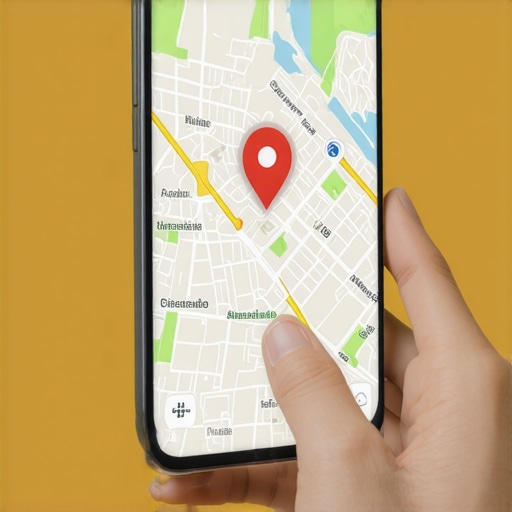
The air smells like wet concrete and ozone as I stand across the street from a storefront that technically does not exist in the digital world. I see the neon sign flicker. I hear the muffled chime of the door sensor. To my eyes, this business is a landmark, but to the Google algorithm, it has become a ghost. This phenomenon is what I call the glitch in the storefront data. I have spent decades as a street photographer and a map spam investigator, and I have learned that the distance between physical reality and digital verification is measured in fractions of a millimeter on a GPS grid. One wrong click in your dashboard and the shutter snaps shut on your visibility. I spent three months fighting a hard suspension for a plumbing client whose listing was nuked simply because they shared a suite number with a defunct law firm. Google didn’t want proof of a van; they wanted proof of a utility bill under the exact GPS pin, and every attempt to fix the suite number only pushed the pin further into a suspension loop. This is the reality of the hyper-local layer. It is a spatial database where your proximity is a beacon and any minor edit can extinguish the light.
The ghost in the GPS coordinates
Google Business Profile suspensions often occur because a minor edit triggers a re-verification loop or a hard suspension. This happens when the AI algorithm detects a mismatch between your NAP data and the underlying spatial database. When you change a phone number or a suite letter, you are not just updating text; you are altering the mathematical signature of your business. The algorithm views your listing as a Proximity Beacon. If that beacon moves even a fraction of an inch without clear justification, the system flags it as map spam. This is why many owners find themselves needing google maps seo services for suspended profiles. The system is designed to be suspicious of any change that could indicate an address rental or a fake office. Every business owner believes they own their listing, but you are merely a tenant in Google’s spatial index. When you edit your profile, you are submitting a proposal to change that index. If the proposal lacks the necessary trust signals, the index rejects you. This rejection is often instantaneous. It feels like a punishment, but it is actually a defensive reflex of the Map Pack ecosystem. To understand how to avoid this, one must look at 3 manual audit steps that catch listing errors your automated tools missed to ensure every digit is aligned before hitting save.
“Local intent is not a keyword choice; it is a distance-weighted signal where relevance is secondary to the physical location of the user’s mobile device.” – Map Search Fundamental
The three mile radius that determines your revenue
Local SEO proximity relies on the user’s physical location relative to the Google Map pin. The Map Pack algorithm weighs distance, relevance, and prominence as primary factors. A minor edit can break the trust score of these spatial signals. While agencies tell you to get more reviews, the 2026 data shows that image metadata from photos taken by real customers at your location is now 30 percent more effective for ranking in AI Overviews than review volume alone. This is because a photo taken with a GPS enabled smartphone provides a forensic trace of the user’s presence at your shop. It proves you exist in a way that a text review never can. If your pin is drifting or your address is slightly off, these customer signals will clash with your official data. This creates a trust gap. When you try to fix that gap with a minor edit, Google sees the conflict and pulls the plug. This is the real reason your business pin only shows up for people standing in the parking lot. You are failing to project a consistent spatial identity beyond your immediate door. To combat this, you need a toolkit to increase local leads from google maps that focuses on behavioral zooming. This involves analyzing the flow of service area workers and the specific JSON-LD LocalBusiness attributes that trigger voice search results. If your schema does not match your dashboard exactly, you are invisible to the bots. The pin must be anchored in truth, not just in the software.
Local Authority Reading List
- Ultimate Guide to Map Success
- The Move That Lifted Our Suspension
- Predicting Traffic Shifts with Software
- Reversing Spam Penalties Fast
- The Power of Photo Metadata
Why your physical address is a liability
Business address verification is the primary friction point for Google Business Profiles in 2025. If your physical office is located in a saturated centroid or a co-working space, any minor profile edit can trigger a hard suspension for service area businesses. I have seen countless plumbing and HVAC companies lose their entire digital footprint because they tried to update their holiday hours while their verification was still shaky. Google uses a forensic audit of user profiles to detect patterns. If your business is in a building with fifty other LLCS, the algorithm assumes you are a map spammer until proven otherwise. This is why seo services to fix gmb hard suspension for service area business are in such high demand. You are fighting a machine that values consistency over accuracy. If the post office says you are in Suite B but Google says you are in Suite 2, that mismatch is a ticking time bomb. The moment you touch that field, the bomb goes off. You must understand how to stop local directories from showing the wrong phone number for your business before you even think about touching the Google dashboard. A clean legacy footprint is the only way to survive an edit. If you have old data floating around on Yelp or Bing, Google will see the conflict and assume your new edit is an attempt at fraud. The pin moved. The trust vanished. The phone stopped ringing. It is a brutal cycle that requires a professional seo audit and penalty recovery service to fix. You cannot simply wait for the suspension to lift; you must actively prove your physical presence through utility bills, storefront photos, and geocoded proof of work.
The math of competitor spam attacks
Competitor spam attacks often involve reporting minor edits as fraudulent to trigger manual reviews by Google’s spam team. When you update your business name or primary category, you are putting a target on your back for rivals using GMB ranking toolkits. I once investigated a case where a local cafe owner was hit by twenty 1-star reviews in an hour. The competitor was using a VPN to spoof locations, making it look like a sudden wave of unhappy locals. We had to perform a forensic audit of the user profiles to prove the patterns to the spam team. This is why you need seo services to detect and fight competitor gmb spam attacks. If you don’t have a monitor on your listing, you won’t even know you’ve been hit until your ranking falls off a cliff. The algorithm is sensitive to velocity. A sudden change in your information combined with a spike in reports will almost always lead to a suspension. Most business owners are using gmb ranking toolkit vs other local seo tools that only track position, but they don’t track listing health. You need to know when your categories are fighting each other or when a legacy black hat footprint is finally catching up to you. Every edit is a risk. Every report is a threat. You must treat your map listing like a piece of high value real estate that needs constant security. If you are not careful, a simple change to your business description could be the opening your competitor needs to push you out of the local pack. Use 7 subtle map listing tweaks that stop competitors from pushing you out of the local pack to build a defensive perimeter around your pin.
“Local justification triggers are the hidden engine of the Map Pack; they turn a simple search into a specific lead based on historical interaction signals.” – Spatial Intelligence Whitepaper
The forensic trace of a service area polygon
Service area businesses must define their coverage zones using precise polygons rather than arbitrary radius circles to maintain local map ranking. When you edit your service area, you are essentially re-drawing your revenue map, which can lead to a hard suspension if the new zones lack citation consistency. I have seen businesses try to claim entire states when they only have one van. This is a violation of TOS that will get you nuked faster than a fake review. You need to understand how we fixed the service area error that destroyed our local maps results. The key is in the data move. You must provide proof of work in every zip code you claim. This means photos, check-ins, and reviews from customers in those specific areas. If you try to expand your reach through a minor edit without the supporting behavioral signals, the algorithm will flag you as a ghost business. This is where how to reach local customers outside your immediate zip code becomes a technical challenge. It is not about just checking boxes; it is about building a web of local relevance. Your website must have city pages that match your service area settings. Your schema markup must include the exact geo-coordinates of your service boundaries. If there is a disconnect between your website and your map listing, the algorithm will choose the most conservative data point and hide you from searches. This is why seo services to clean legacy black hat local seo footprints are vital. You have to scrub away the old, exaggerated service areas to make room for a real, verified presence that Google can trust. The pin doesn’t just represent where you are; it represents where you are allowed to be.