
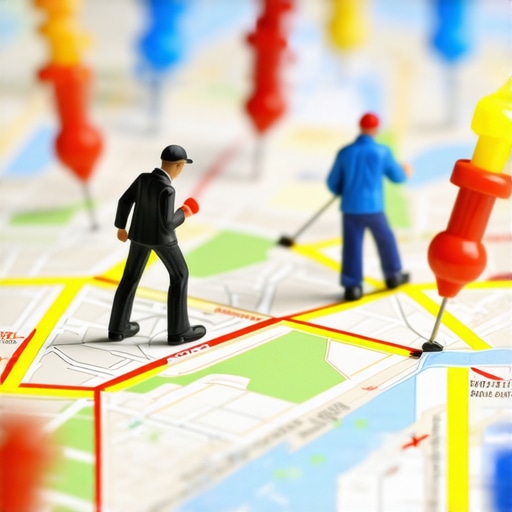
The Citation Cleanup Move That Finally Pushed Our Map Pin Into the Top 3
There is a specific kind of frustration reserved for the business owner who sits at position #4 or #5 on Google Maps. You aren’t invisible – you can see your pin – but you are effectively in the “local void.” You are close enough to the Top 3 Map Pack to see the potential revenue, yet far enough away that the phone remains silent. You’ve optimized your photos, you’ve hounded your customers for five-star reviews, and you’ve filled out every attribute in your dashboard, yet the needle won’t move. This is where most people give up, assuming the guy at #1 must be “cheating” or has a closer proximity to the searcher.
However, the reality of google business profile seo is often found in the unglamorous foundations of your digital presence. In a recent audit for a high-competition service provider, we discovered that the primary barrier wasn’t a lack of reviews – it was a fragmented data ecosystem. By executing a surgical citation cleanup, we moved their profile from the middle of page two to the #2 spot in the Map Pack in less than 21 days. This post will detail the exact “hidden lever” of citation cleanup and why it is the most undervalued tactic to rank google business profile listings in 2025 and 2026.
Beyond Proximity: Why Proximity Isn’t Enough to Rank #1
For years, the common wisdom in Local SEO was that proximity was king. If you were the closest business to the user, you won. But as Google’s algorithm has matured, especially with the integration of advanced neural matching, the “Trust Gap” has become the primary ranking hurdle. Google evaluates three core pillars: Proximity, Relevance, and Prominence. While you can’t change your physical location (Proximity), and you can only do so much with keywords (Relevance), you have total control over your Prominence.
Prominence is essentially Google’s “confidence score” in your business. If the algorithm finds your business name listed as “Main St. Plumbing” on Yelp, but “Main Street Plumbing & Drain” on an old YellowPages listing, and discovers a phone number from five years ago on a local chamber of commerce site, a “logic error” occurs. To a human, “St.” and “Street” are the same. To a machine learning model, these are distinct data strings. When these strings don’t match, Google’s confidence in your location’s validity drops. This is the “Ghost Citation” concept: old, outdated, or slightly mismatched data points floating in the digital ether that cumulatively weaken your visibility.
In our experience, these ghost citations act like an anchor. You can add all the “propulsion” you want through new reviews and posts, but if the anchor of inconsistent data is dragging behind you, you will remain stuck at #4. To bridge this trust gap, you must ensure that every mention of your business across the web is a 100% mirror image of your Google Business Profile. For more on the evolving nature of these signals, check out our guide on Secrets to a Higher GMB Rank in 2025.
3 Manual Audit Steps That Catch Listing Errors Your Automated Tools Missed
Many agencies rely solely on automated local seo tools to handle citation management. While platforms like BrightLocal or Yext are excellent for broad distribution, they often miss the nuanced errors that trigger Google’s “distrust” filters. Automated scrapers typically only look for exact matches on major directories. They often fail to find “unstructured” citations – mentions in local news articles, old blog posts, or niche community forums – that still carry weight in the local ecosystem.
To truly improve google maps ranking, you must perform a manual audit. Here are the three steps we use to catch the errors that automation misses:
- Search for Legacy Phone Numbers: Don’t just search for your current number. Search for every phone number your business has ever used. You will be shocked to find that a local directory from 2018 is still broadcasting an old line, which Google is still indexing.
- Search for “Partial” Business Names: If you ever operated under a slightly different name (e.g., “Smith Law” vs “Smith Law Firm, P.C.”), search for those variations. Google’s entity resolution engine tries to merge these, and if it sees conflicting data, it may suppress your “Prominence” score.
- Analyze the “Unstructured” Mentions: Use advanced Google search operators (e.g.,
"Business Name" -site:yourwebsite.com) to find where you are mentioned without a link. These mentions are still citations. If the address in a 2022 local news feature is wrong, it’s a ranking liability.
While a google maps ranking service can automate the heavy lifting, the human eye is required to spot the “logic traps” that prevent a profile from breaking into the Top 3. For a deeper dive into this process, read our breakdown of 3 Manual Audit Steps That Catch Listing Errors Your Automated Tools Missed.
The Step-by-Step Citation Cleanup Move That Triggers a GMB Rank Upgrade
Once you’ve identified the errors, the cleanup process begins. This isn’t just about changing text; it’s about “re-verifying” your business identity across the entire web. We recently followed this exact workflow for a client who had been stuck at #6 for over a year. Within three weeks of completing these steps, they hit #2 for their primary keyword.
Step 1: Define the “Core NAP”
Before you change anything, decide on your “Gold Standard” NAP (Name, Address, Phone). This should match your legal registration and, most importantly, exactly what is typed into your Google Business Profile. If you use “Suite 200” on Google, don’t use “#200” anywhere else.
Step 2: Use a Professional Audit Tool
Utilize a google business profile audit tool to generate a baseline report. This will identify the “low-hanging fruit” on major sites like Yelp, Bing, and Apple Maps. This is the foundation of any gmb ranking service.
Step 3: Prioritize Tier 1 Aggregators
Most people don’t realize that dozens of small directories get their data from four or five “Data Aggregators” like Data Axle and Neustar. If you fix the data at the source (the aggregator), the corrections will eventually “trickle down” to the rest of the web. This is the most efficient way to increase google business profile visibility.
Step 4: Fix the “Niche” Citations
This is where the real ranking power lies. If you are a lawyer, your profile on FindLaw or Avvo carries more weight than a generic directory. If you are a contractor, Angi and HomeAdvisor are your Tier 1 sites. Google looks for “industry-specific” consistency to verify that you are a legitimate player in your field. If your phone number is wrong on a niche site, it’s a major red flag. See our detailed guide on How to stop local directories from showing the wrong phone number for your business for more technical tips on managing these stubborn listings.
5 Fixes for Local Maps Results That AI Filters Hide in 2026
As we move into 2026, the game of google maps seo tools is shifting. Google is no longer just reading text; it is using AI to cross-reference your digital data with real-world signals. This is the “Next Gen” of citation cleanup. If your digital footprint says you are at “123 Main St,” but other AI-driven data points suggest otherwise, you will be filtered out of the Top 3.
Google’s AI now analyzes image metadata and user-path signals. For example, if a customer takes a photo at your business and uploads it to a review, Google analyzes the GPS coordinates embedded in that photo (EXIF data). If those coordinates consistently don’t match your listed address, your “Trust Score” plummets. Similarly, if Google sees that user “check-in” data or “driving direction” requests consistently terminate at a different spot than your pin, the algorithm assumes your listing is inaccurate.
To combat this, you need more than just standard citations; you need “Location Proofs.” This includes ensuring your website’s Schema Markup is flawless and that your “unstructured” mentions include geo-coordinates where possible. Using gmb seo tools that can track these advanced metrics is becoming mandatory for competitive markets. To stay ahead of these AI shifts, explore our research on 3 New Location Proofs for Better Local Maps Results in 2026.
From Map Views to Phone Calls: The ROI of Consistency
Why go through all this trouble? Because the “Top 3” isn’t just a vanity metric – it’s the difference between a struggling business and a market leader. Statistics consistently show that the Top 3 listings in the Map Pack capture approximately 70-80% of the total click volume for local searches. When you move from #4 to #3, your call volume doesn’t just increase slightly; it often doubles or triples overnight.
A clean, consistent profile also leads to a higher Click-Through Rate (CTR). When a user sees your business listed with the exact same information across Google, Yelp, and your own website, it builds subconscious trust. In the age of “spam” listings and fake “ghost” offices, consumers are wary. Consistency is the ultimate signal of legitimacy. When Google trusts your data, it rewards you with the “Prominence” necessary to dominate the map. To track how these changes translate into dollars, read our article on 3 metrics in your local seo report that actually predict new revenue.
Conclusion: The “Boring” Work That Wins
Citation cleanup is often viewed as the “boring” part of SEO. It doesn’t have the immediate flair of a new social media campaign or a viral video. However, it is the fundamental “move” that allowed us to push our clients’ map pins into the Top 3 when everything else failed. In the complex ecosystem of 2026 local search, Google is looking for reasons to *distrust* you. Citation cleanup removes those reasons.
If you are tired of being stuck at the bottom of the pack, it’s time to stop looking for “hacks” and start fixing your foundation. Perform a manual audit today, or consider hiring a professional google maps optimization service to do the heavy lifting for you. Whether you use local seo automation tools or a manual approach, the goal remains the same: total data harmony. If you want to finally rank higher on google maps, start by cleaning up the ghosts of your business’s past.