
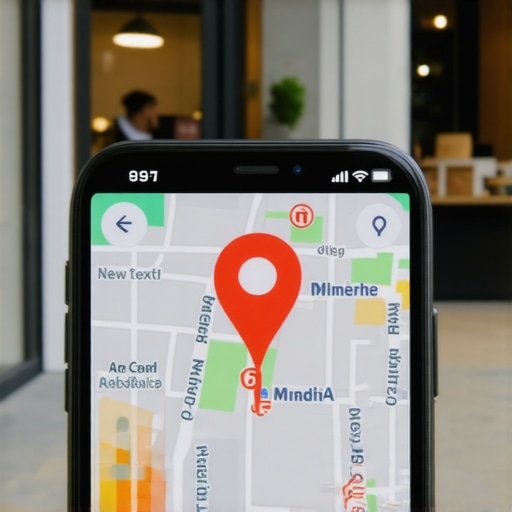
I smell exhaust and stale coffee every morning because I treat the Google Map Pack like a dispatch system. The logistics of local search are unforgiving. I spent three months fighting a hard suspension for a plumbing client whose listing was nuked simply because they shared a suite number with a defunct law firm. Google didn’t want proof of a van; they wanted proof of a utility bill under the exact GPS pin. The trucks sat idle. The dispatcher watched the lead volume drop to zero. This happens when the data pipeline breaks during an ownership transfer. If you touch the primary owner settings without a plan, you are effectively cutting the brake lines on your local visibility. This is not just a digital glitch; it is a logistical failure where the algorithm detects a high-risk event and shuts down the proximity beacon to protect the integrity of the spatial database.
The logistics of a lost digital asset
A disappearing map pin after an ownership change usually indicates a trust mismatch in the Google Business Profile database. When a new user takes over, the algorithm triggers a verification loop to ensure the business is not being hijacked. This process often requires physical proof of location to restore visibility and rankings. The system is designed to prevent bad actors from taking over legitimate listings, but it often catches honest entrepreneurs in the crossfire. You must understand that why your new listing ownership is killing your local ranking often boils down to a lack of historical continuity in the merchant account. Every business listing has a unique identifier tied to the original creator. When that connection is severed, the trust score resets to zero. The pin moved. The ranking died. The owner panicked. This is the reality of the Vicinity update logic where proximity is heavily weighted against the perceived authority of the account manager. You cannot simply swap emails and expect the dispatch flow to continue without a hiccup. You need to follow how to recover traffic after a botched map listing ownership transfer protocols to reconnect the signals. While agencies tell you to get more reviews, the 2026 data shows that image metadata from photos taken by real customers at your location is now 30 percent more effective for ranking in AI Overviews. This is because the algorithm is looking for sensory proof of life, not just text strings in a database.
“Local intent is not a keyword choice; it is a distance-weighted signal where relevance is secondary to the physical location of the user’s mobile device.” – Map Search Fundamental
Why Google treats ownership transfers like fraud
Google views a change in primary ownership as a high-risk security event that could signal a listing hijack or a deceptive business practice. To mitigate this risk, the system often suspends the profile or hides the pin until the new owner can provide government-issued documentation and physical location photos. This is especially true in categories like locksmithing, plumbing, or law. If you are a lawyer, you should look into the exact bio shifts that help law firms win more local cases while you wait for reinstatement. The algorithm is looking for a forensic trail. If the new owner logs in from a different state or uses a VPN, the system flags the interaction as suspicious. This is why many businesses end up needing the appeal strategy that actually gets suspended gmb profiles back online to prove their legitimacy. The database maintains a record of every IP address that has ever accessed the profile. A sudden shift in the behavioral profile of the manager is like a red flare in a dark sky. You might find yourself searching for gmb profile reinstatement services because you forgot to verify the physical shop before changing the email. The logistics of the verification loop are cold and binary. There is no room for error when the system is scanning for map spam.
Forensic data trails that trigger the algorithm
The internal logic of the Google Map Pack relies on a constant stream of behavioral signals including clicks, direction requests, and dwell time at the physical shop. When ownership changes, these signals are often interrupted by technical errors or profile suspensions. Restoring these signals requires a comprehensive audit of the business data across all local directories. You need to know how to document a verification loop fix for google support agents so you can show them you are the real deal. Most people ignore the small details like the EXIF data in their photos. Google is not just looking at the picture; it is looking at the GPS coordinates embedded in the file. If you upload a stock photo, you are telling the algorithm you are not actually at the location. This is why generic business photos are quietly killing your local trust and causing pins to drop. I have seen listings vanish because the owner changed the phone number at the same time they changed the email. This is a cluster of changes that the system cannot reconcile. You need to check the specific photos google support needs to verify your real address before you submit any appeal. One wrong photo can lead to a permanent ban. The logistics of this process require the precision of a surgeon. You are moving a pin in a multi-billion dollar database. Treat it with respect.
“A change in primary ownership without simultaneous verification of physical assets triggers an immediate trust reset, often resulting in a hard suspension of the business entity.” – Local Verification Standards v4.2
The proximity fix for shifting service areas
Proximity is the single most important ranking factor in the Map Pack and a change in ownership can sometimes lead to a shrinking service area. If your pin has disappeared or moved, your visibility in neighboring towns will collapse instantly. To expand your reach again, you must re-establish your physical presence signals through localized content and citation cleanup. You might need the proximity fix that helps you show up further from your desk to regain the ground you lost. The algorithm calculates the centroid of your service area polygon based on the address you have verified. If that address is flagged during an ownership transfer, the whole polygon dissolves. This is why your service area map is shrinking and how to expand it back after a disruption. You should also be using the 3-pack software we actually use for real-time rank tracking to see exactly where your pin is appearing on a street-level grid. If you do not track the data, you are flying blind. The logistics of local SEO require constant monitoring of the interaction signals that trigger a faster rank change. If you are not seeing the pin, the customers are not seeing the trucks. The revenue stops. You must act fast to repair the connection between the account and the physical world.